When you’re towing a caravan around New Zealand, your tyres are doing a lot of work.
From long stretches of State Highway to winding rural roads, steep hills and gravel roads, New Zealand touring can put plenty of demands on both your tow vehicle and caravan tyres.
Correct tyre pressure is an important part of safe towing. But how often should you actually check your caravan tyre pressure?
As a general rule, caravan tyre pressures should be checked at least monthly while your caravan is stored, before every trip, and regularly while you’re traveling.
Better still, a Tyre Pressure Monitoring System (TPMS) can keep an eye on your tyre pressures and temperatures while you’re on the road, helping alert you to a potential problem before it becomes a much bigger one.
Why Caravan Tyre Pressure Matters
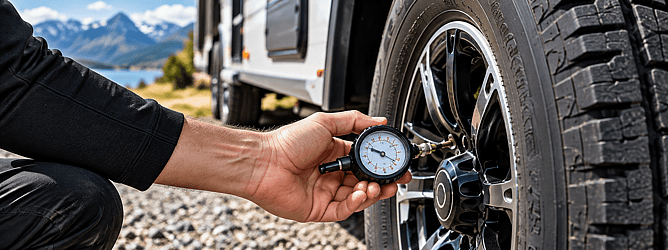
Correct tyre pressure affects much more than whether your tyres look properly inflated.
Running your caravan tyres at the correct pressure can help with:
Safer handling and braking
Tyre grip
Reducing uneven or premature tyre wear
Fuel efficiency
Reducing excessive heat build-up
Identifying slow leaks or other tyre problems before they become serious.
NZ Transport Agency Waka Kotahi recommends regularly checking tyre pressures and looking for signs of tyre wear or damage as part of trailer maintenance.
When towing, this becomes particularly important because your caravan tyres are carrying a significant load, often for long periods.
How Often Should You Check Caravan Tyre Pressure?
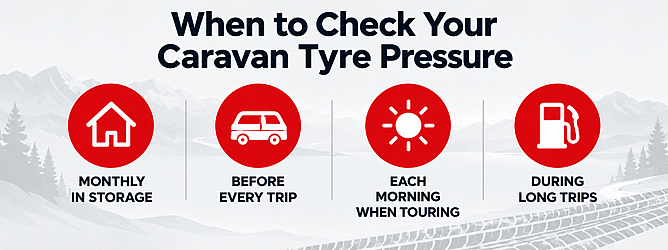
A good routine for New Zealand caravan owners is:
At least once a month while your caravan is stored
Tyres naturally lose pressure over time, even when your caravan isn’t being used. NZTA recommends checking vehicle tyre pressures every month or so, and regularly checking trailer tyre pressures as part of trailer maintenance.
Before every trip
Check your caravan and tow vehicle tyres while they are cold and make sure they’re inflated to the recommended pressure for your particular vehicle, tyres and load.
Don’t forget the spare tyres on both your caravan and tow vehicle.
Each morning while you’re touring
Before heading off for another day’s driving, take a quick look around your caravan and tow vehicle. Checking your pressures before the tyres warm up gives you a useful cold-pressure reading.
During long traveling days
Whenever you stop for fuel, lunch or a rest break, it’s worth having another quick look around the caravan.
NZTA recommends checking during a journey that trailer tyres remain correctly inflated and that tyres and wheel bearings aren’t overheating.
A TPMS makes this considerably easier because you can monitor what’s happening from inside your vehicle.
Always Check Tyre Pressure When the Tyres Are Cold
Your tyre pressure should generally be checked when the tyres are cold.
As you drive, your tyres heat up and the pressure inside them increases. This means checking pressures immediately after a long drive won’t give you the same reading as checking them before setting off.
Always follow the tyre, caravan or vehicle manufacturer’s recommended tyre pressure, taking your load into account.
Don’t simply copy the pressure used by another caravan owner. Different caravans, tyre sizes, tyre constructions and loads can require different pressures.
Don’t Forget About Your Caravan While It’s Parked
One of the biggest differences between caravan tyres and everyday vehicle tyres is the amount of time they can spend sitting still.
Your car may be driven every day, but your caravan could sit unused for weeks or even months between adventures.
During that time, a slow leak can easily go unnoticed.
Before taking your caravan away after an extended period in storage, check:
Tyre pressures
Tread condition
Sidewalls for cracking, bulges or other damage
Valve condition
Spare tyre pressure and condition
Don’t assume a tyre is correctly inflated simply because it looks OK. A significant pressure difference isn’t always obvious from looking at the tyre.
What Happens If Caravan Tyre Pressure Is Too Low?
Under-inflated tyres can flex more as they roll.
That additional flex creates heat, and heat is one of the things you want to keep under control when towing a heavily loaded caravan.
Low pressure can also contribute to poor handling, increased tyre wear and reduced fuel efficiency.
The difficulty is that you may not realise you’ve picked up a puncture or developed a slow leak until the tyre has already lost a significant amount of pressure.
That’s where a Tyre Pressure Monitoring System becomes particularly useful.
How Does a TPMS Help?
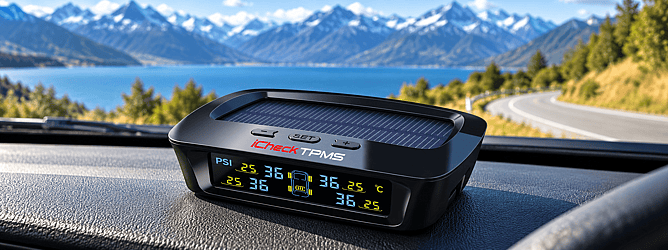
A TPMS monitors your tyres electronically and displays tyre pressure and temperature information inside your tow vehicle.
Instead of relying solely on occasional manual checks, you can see what’s happening with your tyres while you’re traveling.
With an iCheck TPMS, sensors fitted to your tyre valves transmit tyre pressure and temperature information to the monitor in your vehicle.
If something changes outside the set parameters, the system provides a visual and audible warning.
That could give you valuable time to find somewhere safe to pull over and investigate the problem before continuing your journey.
iCheck InstaData™ – Know Your Pressures Before You Leave
One particularly useful feature for caravan owners is iCheck InstaData™.
Many TPMS sensors go into sleep mode when the vehicle isn’t moving and only start transmitting again once you’re underway.
iCheck TPMS wheel sensors send updated information to the monitor every five minutes, whether your vehicle is moving or stationary.
That means if your caravan has been parked for several weeks and one tyre has developed a slow leak, you can see the latest pressure information before you even leave the driveway.
It’s a simple feature that can make a big difference when preparing for a trip.
IntelliData™ Makes Setting Up Your TPMS Easy
Tow vehicles and caravans often run different tyre pressures, which can make setting individual high and low pressure alarms complicated
iCheck’s IntelliData™ simplifies the process.
Install the wheel sensors onto your correctly inflated cold tyres and the system automatically establishes the current pressure as its benchmark.
The monitor then provides a visual and audible warning if tyre pressure rises by 25% or drops by 15% from that benchmark.
This also makes things easier for 4WD and off-road caravan owners who air their tyres down when heading off the seal.
Once you’ve adjusted the tyre pressure for the terrain, reinstall the sensors and the system establishes a new benchmark.
Monitor Your Caravan Wheel Bearings Too
Tyres aren’t the only components generating heat underneath your caravan.
Wheel bearing problems can also become serious very quickly.
iCheck TPMS offers optional wheel bearing and hub temperature sensors, allowing caravan owners to monitor these temperatures through the same display.
This gives you another layer of information when you’re towing, particularly on long trips around New Zealand.
Which iCheck TPMS Kit Do I Need?
The right system depends on your vehicle and caravan combination.
The iCheck 5 Sensor Kit is ideal for monitoring four vehicle tyres plus a spare.
The iCheck 8 Sensor Kit is designed for a 4WD and single-axle caravan combination, allowing you to monitor the road tyres and spares.
For larger setups, the iCheck 10 Sensor Kit is designed for a 4WD and dual-axle caravan.
All feature a wireless solar-powered display and weatherproof external wheel sensors.
TPMS Doesn’t Replace Good Tyre Maintenance
A tyre pressure monitoring system is a valuable safety tool, but it doesn’t replace regular tyre inspections and maintenance.
Before heading away, you should still physically inspect your tyres and make sure your towing setup is ready for the road.
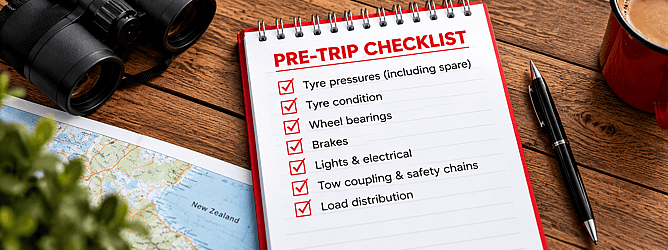
Check your:
Caravan and tow vehicle tyre pressures
Tyre tread and general condition
Spare tyres
Wheel nuts
Wheel bearings
Caravan brakes
Lights and electrical connections
Tow coupling and safety chain
Load distribution
A few minutes spent checking your setup before leaving can save a lot of trouble later.
Make Tyre Pressure Part of Your Pre-Trip Routine

So, how often should you check your caravan tyre pressure?
At least monthly when your caravan isn’t being used, before every trip, each morning when you’re touring, and regularly during longer traveling days.
But tyre pressure can change between manual checks.
That’s the real advantage of fitting a TPMS.
An iCheck Tyre Pressure Monitoring System lets you monitor your caravan and tow vehicle tyre pressures and temperatures while you’re traveling, giving you an early warning when something isn’t right.
Whether you’re heading away for a weekend at the beach, traveling the South Island or setting off on an extended tour around New Zealand, knowing what’s happening with your tyres can provide valuable peace of mind.
Tow With Confidence With iCheck TPMS New Zealand
iCheck TPMS New Zealand is based in Taupō and supplies TPMS systems for 4WDs, caravans and other towing applications throughout New Zealand.
Explore the iCheck TPMS range and find the right system for your vehicle and caravan setup.
Frequently Asked Questions About Caravan Tyre Pressure & TPMS
How often should I check my caravan tyre pressure?
You should check your caravan tyre pressures at least monthly while your caravan is stored, before every trip, and regularly while traveling. If you’re touring, it’s a good idea to check your tyres each morning before setting off.
A TPMS provides additional peace of mind by continuously monitoring tyre pressure and temperature while you’re traveling.
What tyre pressure should I run in my caravan tyres?
There isn’t one correct tyre pressure for every caravan. The right pressure depends on factors such as your caravan, tyre size and construction, and the load you’re carrying.
Always follow the recommendations provided by your caravan, tyre or vehicle manufacturer and check pressures when the tyres are cold.
Should I check caravan tyre pressure when the tyres are hot or cold?
Tyre pressures should generally be checked when the tyres are cold, ideally before you start driving.
Tyres heat up while traveling, which causes the pressure inside them to increase. Checking them cold gives you a more consistent reading to compare with the recommended pressure.
Do caravan tyres lose pressure while the caravan is stored?
Yes. Tyres can gradually lose pressure even when your caravan isn’t being used, and a slow leak can also develop while it’s parked.
That’s why you shouldn’t assume your tyre pressures are still correct simply because they were right when you last used your caravan.
Check all tyres, including your spare, before heading away.
Can I tell if my caravan tyre pressure is low just by looking at it?
Not reliably. A tyre can be under-inflated without looking obviously flat, particularly when carrying a heavy load.
Using an accurate tyre pressure gauge or TPMS gives you a much better indication of what’s actually happening.
What does a TPMS do on a caravan?
A Tyre Pressure Monitoring System (TPMS) uses sensors fitted to your tyres to monitor tyre pressure and temperature.
With an iCheck TPMS, this information is transmitted wirelessly to a display inside your tow vehicle. If a reading moves outside the system’s set parameters, you’ll receive a visual and audible warning.
This can alert you to problems such as a slow leak or falling tyre pressure before you might otherwise notice them.
Does a TPMS replace manually checking my caravan tyres?
No. A TPMS should be used alongside good tyre maintenance rather than replacing it.
You should still regularly inspect your tyres for tread wear, cracks, bulges and other damage, and periodically confirm tyre pressures with a reliable pressure gauge.
Think of your TPMS as an extra set of eyes on your tyres while you’re traveling.
Can I monitor my tow vehicle and caravan tyres with one TPMS?
Yes. iCheck offers different TPMS kits depending on your vehicle and caravan combination.
For example, the 8 Sensor Kit is well suited to many 4WD and single-axle caravan combinations, while the 10 Sensor Kit can accommodate larger setups such as a 4WD towing a dual-axle caravan.
Choosing the right number of sensors allows you to monitor your tow vehicle, caravan and, depending on your setup, spare tyres from the same display.
Does a TPMS monitor tyre temperature as well as pressure?
Yes. iCheck TPMS monitors both tyre pressure and temperature, giving you more information about what’s happening at your wheels while you’re traveling.
Changes in temperature can be useful information when you’re towing long distances, carrying heavy loads or traveling through New Zealand’s varied terrain.
Can an iCheck TPMS monitor caravan wheel bearing temperature?
Yes. Optional iCheck wheel bearing and hub temperature sensors are available, allowing you to monitor temperatures at the caravan hubs through the TPMS display.
This can provide another layer of protection for caravan owners, particularly when traveling long distances.
Is a TPMS worth having on a caravan?
For many caravan owners, a TPMS is a worthwhile addition because tyre pressure can change while you’re driving.
Manual tyre checks are important, but they only tell you what was happening at the time you performed the check. A TPMS continues monitoring while you’re on the road and can alert you if something changes.
For anyone towing a caravan around New Zealand, that additional information can provide valuable peace of mind on the road.

